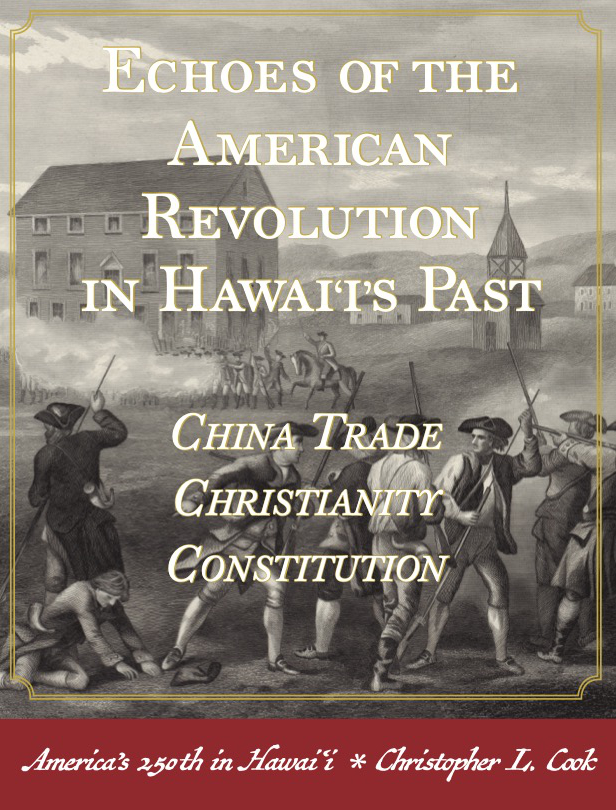
How the American Revolution change the history of Hawai‘i. Accounts of the service records of Revolutionary War veteran fathers and grandfathers of the pioneer missionaries to Hawa‘i. How the Declaration of Independence is at the root of the Kingdom of Hawai‘i’s landmark Declaration of Rights of 1839.
All these topics and more are featured in author Christopher L. Cook’s new book Echoes of the American Revolution in Hawai‘i’s Past. This 100-page, full color, 8.5×11 book is being released to commemorate the 250th anniversary of the Declaration of Independence.
To write Echoes of the American Revolution in Hawai‘i’s Past author Christopher Cook twice traveled to New England to visit the hometowns of the early Missionaries, the graves of their patriotic ancestors, and collected Hawai‘i-linked Revolutionary War accounts in leading Americana archives in Massachusetts and Connecticut.
Echoes of the American Revolution in Hawai‘i’s Pastis now available as a Kindle Book and will be available by July 11 in a paperback version.
I am returning to New England this month to lead a tour of historic sites related to the Native Hawaiian students of the Foreign Mission School in Cornwall, Conn. My first stop in Boston for decades has been the Brattle Book Shop, located right off the Boston Commons, and few blocks away from the Park Street Church. I paid a visit earlier this year during the Boston Blizzard of February 2026, looking forward to experiencing summertime New England weather on my upcoming visit.
I met Ken Gloss proprietor of the Brattle Book Shop in February 2026. You might recognize Ken from his ongoing appearances as an antiquarian book and print expert on PBS’s Antique Roadshow TV series. The story of how Ken and preceding him his father, have kept alive the centuries-old tradition of Boston bookstores can be read here. In a box of ephemera pieces I discovered vintage Hawaiian Historical Society reports from c. 1900, at a very good price too. In writing my book The Providential Life & Heritage of Henry Obookiah I used for reference many books found in the Hawaiian-Pacific section at Brattle Book Shop. The nineteenth-century map of Connecticut printed on the cover of my Obookiah book was found in an 1850s geography book I serendipitously culled from the shop’s open air lot of bargin books.
Brattle Book Shop during the Boston Blizzard in February 2026.
Colorful book spines decorate the bargain book lot located adjacent to Brattle Book Shop.
This locked glass case of in the Park Street Church’s library contains my book The Providential Life & Heritage of Henry Obookiah. Also a copy of Partners in Change, the Hawaiian Mission Houses encyclopedic biograhical collection of Hawai‘i missionaries published to commemorate the 2019 bicentennial of the the departure of the pioneer Sandwich Islands Mission from the Long Wharf in Boston in October 1819.
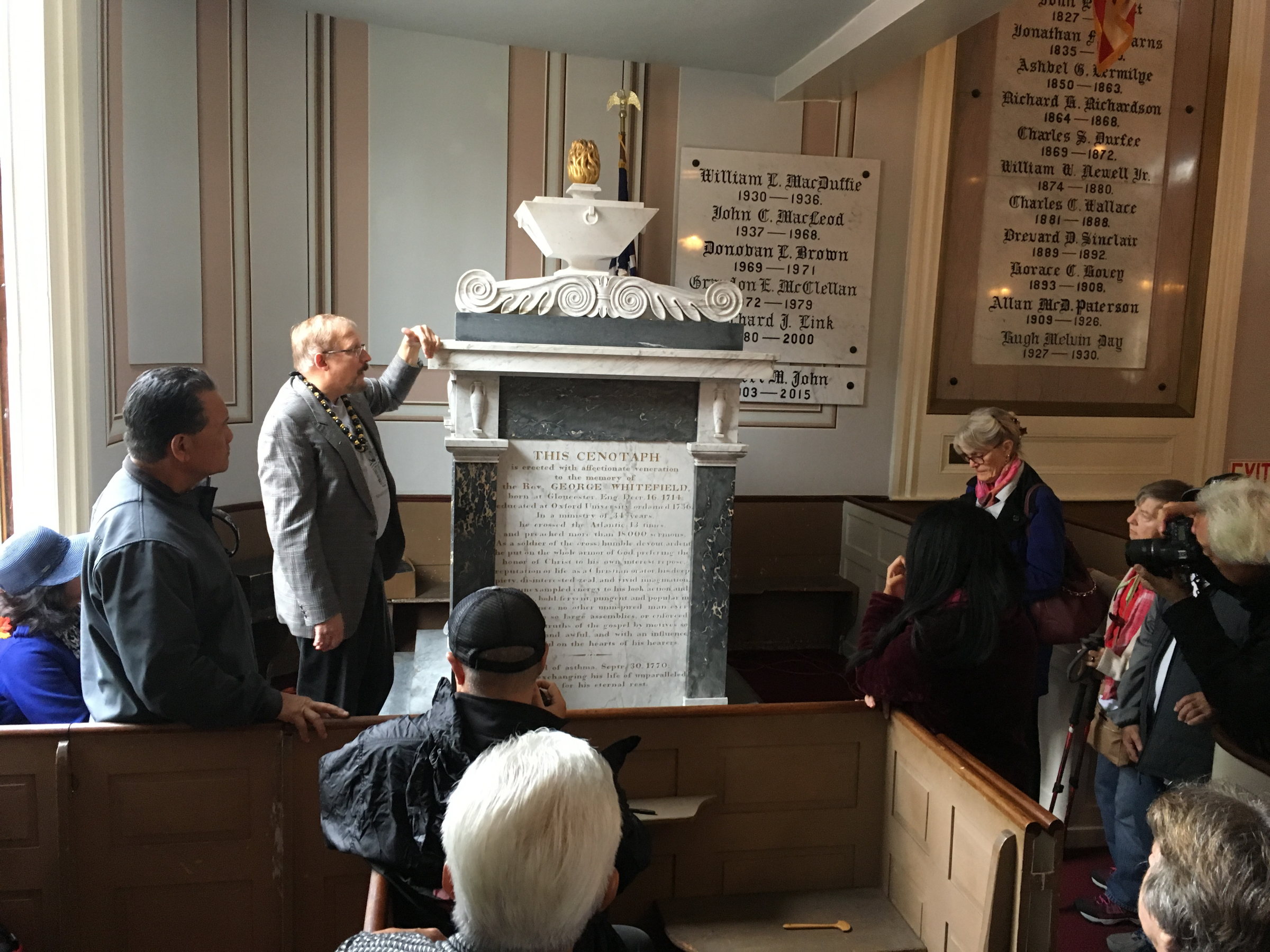
Hana Hou New England tour group in 2019 learns about the life of famed English evangelist George Whitefield at the Old South Church in Newburyport, Mass. Featured is a Cenotaph memorial to Whitefield.
On Easter Day 2026 the life and ministry of mid-18th century English evangelist George Whitefield is coming to the big screen across the United States. A feature film titled the A Great Awakening is opening at Easter in theaters across the country. A tag line for the film calls it the “Revolution before the Revolution,” that is the Revolutionary War. The heart of A Great Awakening is the close friendship and working relationship between renowned American inventor, printer, and diplomat Benjamin Franklin and the English mid-18th century evangelist George Whitefield. The circulation of Franklin’s Philadelphia newspaper barely made him a living until he discovered Whitefield and successfully bid to publish his sermons. The paper flourished, as did the popularity of Whitefield. It is said that Whitefield’s evangelical tours up and down the 13 British American colonies for the first time gave the colonies, in a big way, a vision of joining forces and becoming a nation free from the colonial rule of Great Britain.
In late October 2019 I guided a tour bus full of friends mostly from Hawai‘i on a visit to the Old South Presbyterian Church in Newburyport, Mass. Inside this historic church in this scenic port town on the Merrimack River, in a crypt one floor below the pulpit, lies the remains of evangelist George Whitefield.
Adding a Whitefield stop was a wild card in the tour route of the Hana Hou New England tour, led by Dave and Cheryl Buehring. The tour joined a group from Kawaihao Church in Honolulu, Hawai‘i missionary descendants from the Hawaiian Mission Houses, and many others with Hawai‘i ties at the Bicentennial of the departure of the Sandwich Islands Mission to Hawai‘i. This was held at Park Street Church in Boston in late October 2019.
Following the services at Park Street and the Long Wharf in Boston, where the pioneer Sandwich Islands Mission Company departed to board the brig Thaddeus, we took off amidst the glorious fall leaves of New England. We soon arrived in Cornwall, Ct. to visit the grave of Henry Obookiah-‘Ōpūkaha‘ia; to Phillips Academy at Andover, Mass. to pray at the missionary rock along the shore of Rabbit Pond; and more stops with ties to the Hawai‘i Mission in New England.
I felt led to give our Hawai‘i-focused tour group a look at a couple key sites of American history, though ones with background ties to the Hawai‘i missionary events. I added Plymouth Rock and the National Monument to the Forefathers as a stop. Focusing on a George Whitefield stop seemed a bit out of our realm, but I sensed we should add Old South to our itinerary. I am thankful Dave Buehring went along with my instinct. Now with A Great Awakening being released George Whitefield is becoming an even more iconic figure in the history of American Christianity. Whitefield, well before the Revolutionary War broke out in 1775, had a vision that God had big plans in his Providence for the American colonies. Whitefield died in 1770 in a home directly behind the Old South Church
Below are photos of highlights of our visit to Old South Church.
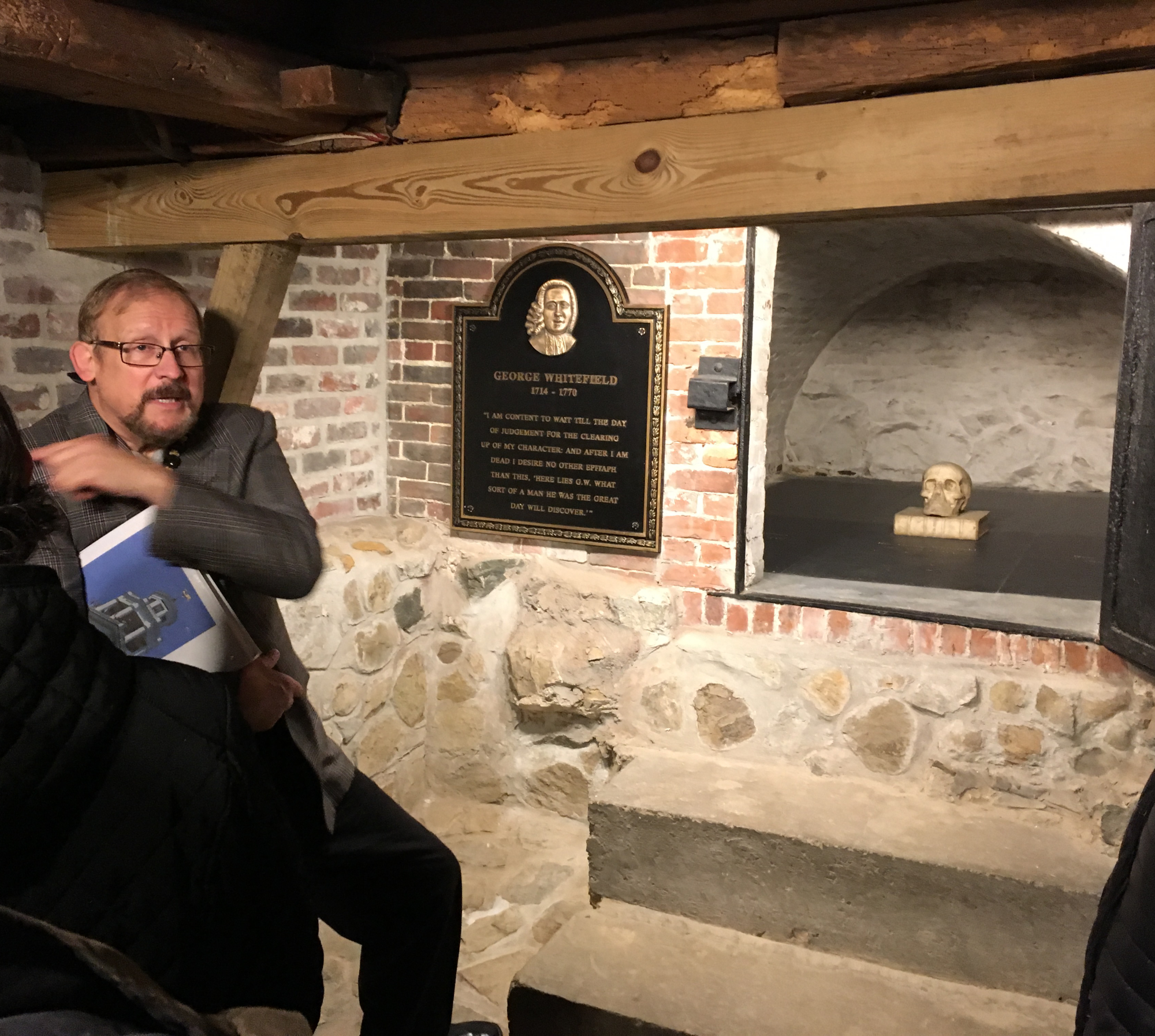
The crypt of George Whitefield in the basement of the Old South Church in Newburyport, Mass. This Whitefield grave is a pilgrimage place for Christians visiting New England. The church tour guide offers a comprehensive and informed narrative about Whitefield, one of the best of its kind I’ve found in all New England.
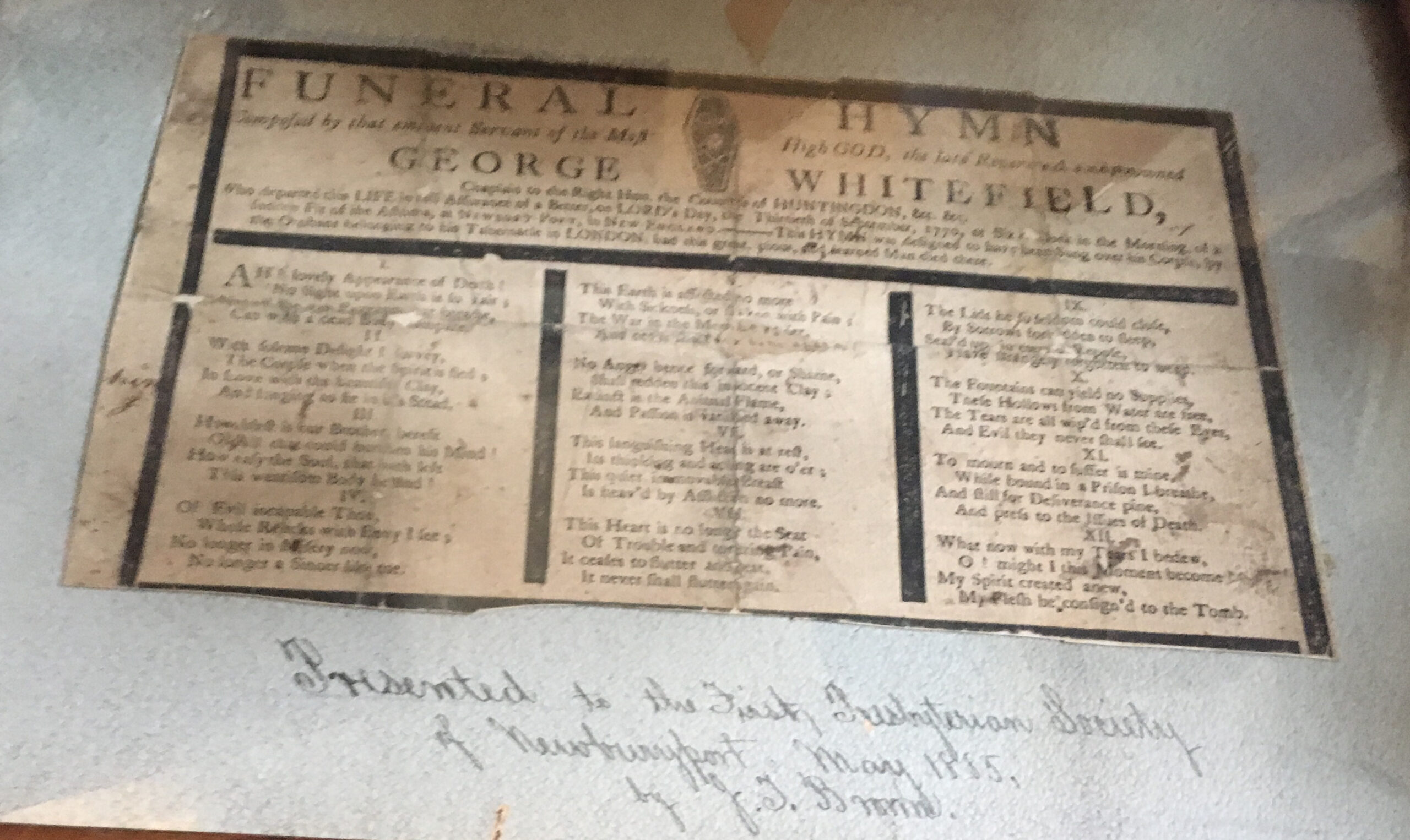
A keepsake copy of a funeral hymn written in 1770 to memorialize the life and Christian devotion of George Whitefield.
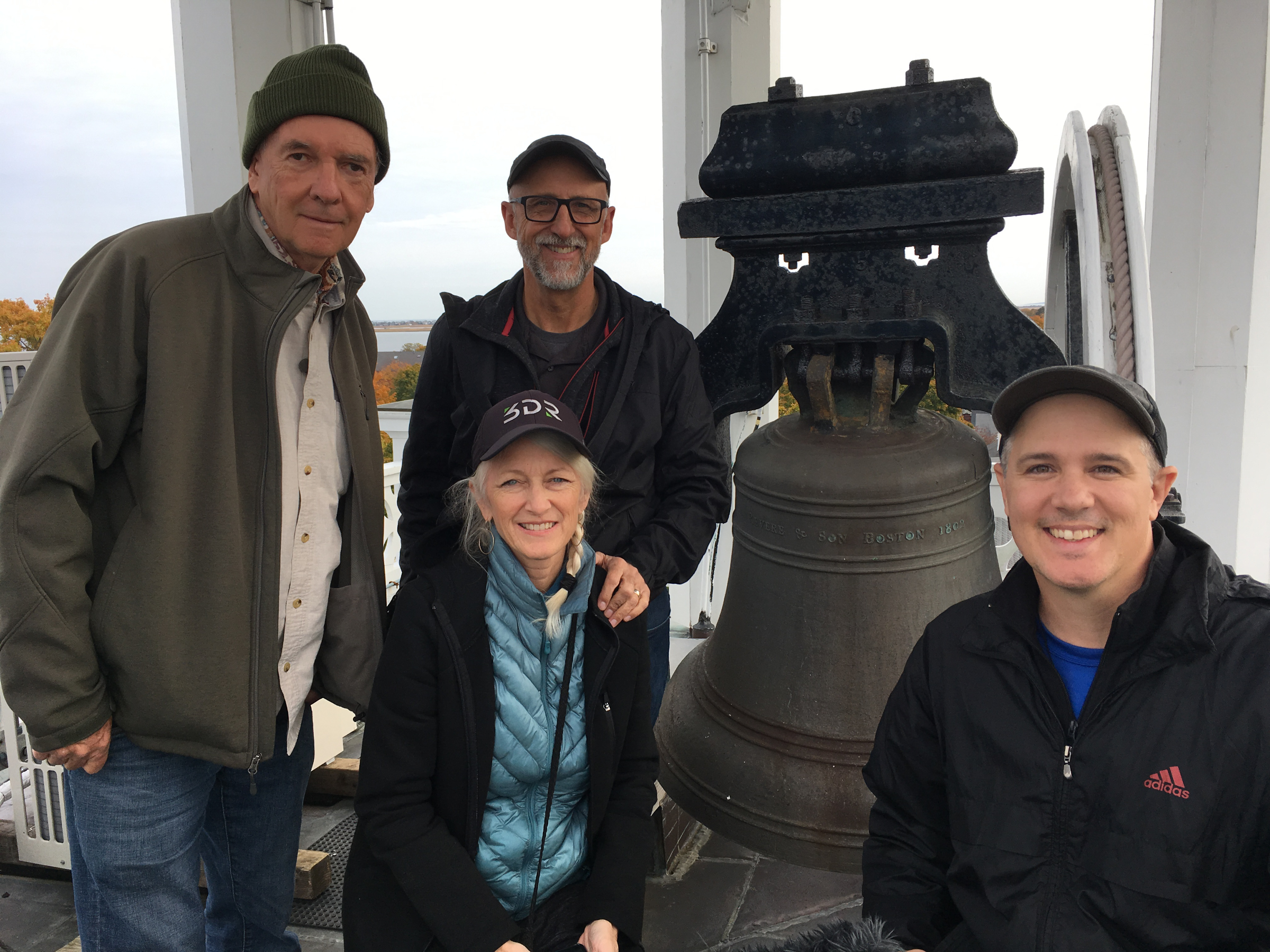
At 2019 visit to Old South Church: Chris Cook (left) with filmmakers Michael and Shari Leinau of Global Net Productions in Seattle, and Jeff Rogers from the University of the Nations in Kailua-Kona Hawai‘i. Paul Revere cast the church’s bell. This photo is taken from the peak of the church’s steeple.